Systems Ahead of Their Time

Ideas Others Borrowed Later

Pressing, the false nine, the high line, the 4-2-3-1. Each has a famous populariser and a less famous originator. Here are four of the originators.

Tactical history is usually told through winners. The coach who lifts the European Cup with a new idea gets the credit, while the coach who tested it in a smaller league a decade earlier becomes a footnote. That is understandable, but it distorts how football actually develops. Ideas migrate through assistants, former players, exchange visits and match footage, and they often start in places with fewer resources and fewer cameras.

The innovators below did not always win the most, and some of their teams leaked goals as freely as they scored them. But their thinking shaped the vocabulary of the modern game, and many of today's coaches can trace their principles back to them, knowingly or not.

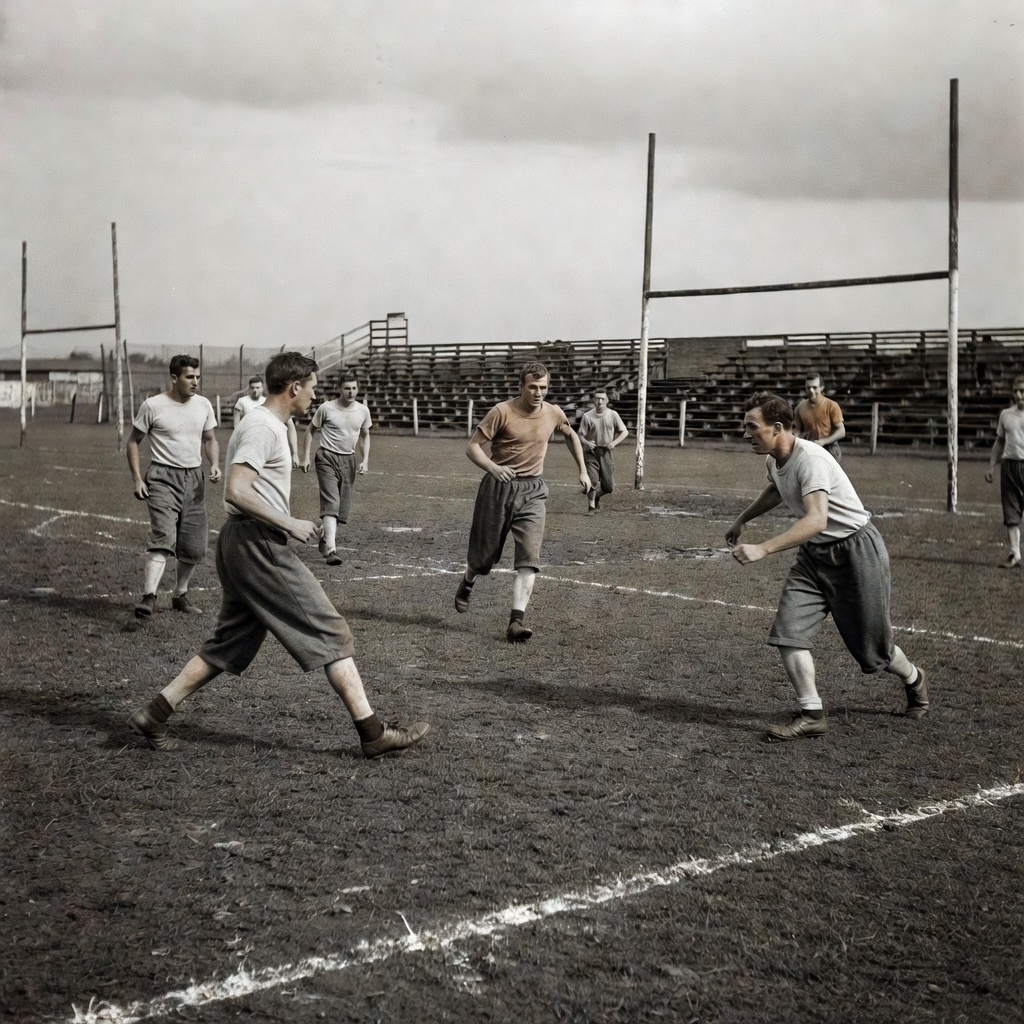
A black and white view of an old football pitch with players in long shorts
Illustrative photograph of mid-century football.

Márton Bukovi

MTK Budapest (Vörös Lobogó) · Olympiacos

At MTK in the late 1940s, Bukovi faced a problem: his centre-forward was being marked out of games. His solution was to withdraw the number nine into midfield, pulling the centre-half out of position and opening space for inside forwards to run into. First Péter Palotás and then Nándor Hidegkuti played the role.

Gusztáv Sebes adopted the idea for the Hungary national team, and Hidegkuti's hat-trick in the 6–3 win at Wembley in 1953 exposed England's rigid marking. Hungary's "Golden Team" made the idea famous; Bukovi's club laboratory made it possible.

  • Late 1940sDevelops the withdrawn centre-forward at MTK
  • 1951, 1953Hungarian champions
  • 1953Idea showcased in Hungary's win at Wembley

Players in coloured bibs closing down a ball carrier during a pressing drill
Illustrative photograph of a pressing drill.

Viktor Maslov

Torpedo Moscow · Dynamo Kyiv, 1964–1970

Maslov, nicknamed "Grandad" by his players, is widely regarded as one of the first coaches to make collective pressing a system. His Dynamo Kyiv sides squeezed space, hunted the ball in groups and used a flat four-man midfield at a time when most teams still used wingers.

The results were three consecutive Soviet titles. His successor at Kyiv, Valeriy Lobanovskyi, added scientific rigour to the approach and became world famous; Maslov laid the foundations.

  • 1960Soviet champion with Torpedo Moscow
  • 1964Soviet Cup with Dynamo Kyiv
  • 1966–68Three straight Soviet titles
A row of flat training markers set high up the pitch to mark a defensive line
Illustrative photograph of defensive line markers.

Zdeněk Zeman

Foggia · Lazio · Roma · Pescara

Zeman's Foggia, "Zemanlandia", rose to Serie A in 1991 playing an ultra-attacking 4-3-3 with a high defensive line and relentless runs from midfield. His training was famously demanding, built on endurance work and repeated attacking patterns.

Two decades later his Pescara side won promotion in 2012 with three young players who would all represent Italy: Lorenzo Insigne, Ciro Immobile and Marco Verratti. Few coaches have developed attacking talent so consistently on such modest budgets.

  • 1991Foggia promoted to Serie A
  • 1990sCoaches Lazio and Roma
  • 2012Serie B title with Pescara
A coach pointing at a tactics board while two players study the positions
Illustrative photograph of a tactical explanation.

Juan Manuel Lillo

Salamanca · assistant at Manchester City

Lillo became one of the youngest coaches in La Liga history after taking Salamanca up in the mid-1990s, and he is widely credited with an early use of the 4-2-3-1. Rather than formations, though, he speaks about relationships between players, spacing and the purpose of possession.

Pep Guardiola has repeatedly named him as a major influence, and Lillo later worked as his assistant at Manchester City. His trophy cabinet is modest; his footprint on positional play is not.

  • 1995Salamanca promoted to La Liga
  • 2006Coaches Guardiola as a player at Dorados
  • 2020–22Assistant at Manchester City

What links them: each solved a local problem in a way that turned out to be universal. Innovation often looks like stubbornness until someone else wins with it.

Have questions? Read Post-Match Questions.